

Software that fits your business, built by people who run it themselves
Most businesses now run on a stack of rented tools that almost fit. A form here, a spreadsheet there, a subscription that does eighty percent of the job, and one person who carries the rest in their head. AI has made it possible to close those gaps with software built for one organization, at a cost that used to be out of reach for anyone but large companies.
That is what we do. We connect the tools you already use, automate the work that happens between them, and build the apps that do not exist yet because nobody made one for a business like yours. Where it helps, AI reads, writes, researches, classifies and drafts. Where it matters, a person decides.
The field moves fast, and we build with these tools every day for our own brands and for clients. We see what the models do well and where they fail, and we watch the vendors' changes and retirements so you do not have to. That is what keeps a small business ahead right now: not buying more software, but having someone at the front who builds, runs and maintains it.
Who this is for
- Owners and directors of small and mid-size businesses who know where the manual work is and want it gone.
- Nonprofits, arts organizations and membership groups that run on volunteers and a few staff and need their systems to do more of the work.
- Publishers, podcasters and content teams who want a production process that runs mostly on its own, with an editor in charge. For audio and video shows, see Podcast Production Engines.
- Anyone paying for a subscription tool that does not quite fit and wondering whether owning the right tool would serve them better.
- Leaders who want a clear-eyed view of where AI belongs in their operation, and where it does not, before anyone writes code.
What you get
A conversation first, then a written proposal
We start with a free 30-minute call about your business and the problem. If a project makes sense, you receive a written proposal with the scope, the stages, who does what, and the price. Nothing is built until you have agreed to it.
The thinking before the building
Where AI fits in your operation and where it does not, which tools to keep, which to connect and which to replace. You get this in plain English, written for your team, so the decision is yours.
Integrations between the tools you already use
Your forms, your database, your mailing list, your website, your CRM and your calendar, connected so that information entered once arrives everywhere it is needed, with AI doing the reading, sorting and writing in between.
Business apps built for how you work
When no product fits, we build one: a review screen for your team, a dashboard, a publishing tool, an export that matches a partner's exact import format. Built with the same frameworks and hosting we use for our own products.
A person at every step that matters
Every system we build has approval points. AI drafts, researches and proposes. Your team reviews, edits and approves before anything is published, sent or imported. We design those gates in from the start, because the trust of your audience depends on them.
Rent it, own it, or both
We agree ownership project by project. You can license the system and let us run and maintain it, or own the whole thing outright, including the intellectual property. Often a client starts with a license and has the option to buy the entire system later.
Built in stages you can see
Projects run in stages with something working at the end of each one. You see real results on your real data early, and we adjust before the next stage, instead of waiting months for a reveal.
A plan for keeping it running
Software built for one organization has nobody updating it automatically, so we say so up front and plan for it: what needs watching, what we check for you, and what happens when a vendor changes or retires something your system depends on.
Work we have built
These are systems we have designed and built for our own brands and for clients. Each one started with a problem that a small team could not solve by working harder.
A social media campaign planner for arts organizations
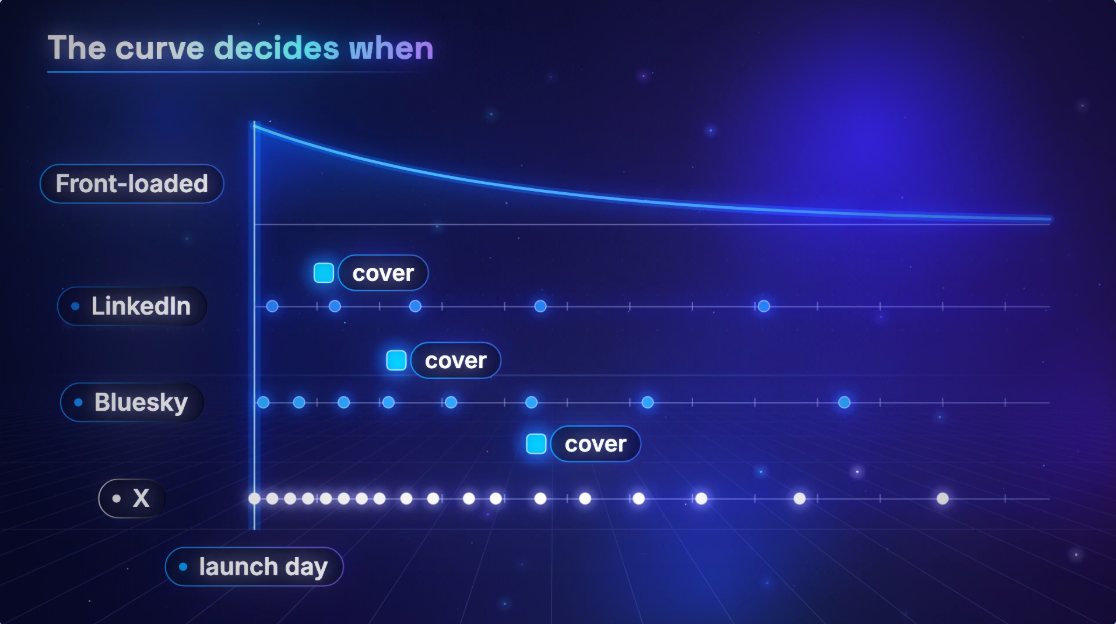
The problem it solves: a small team gets one post out on opening night and then goes quiet. With PolyWiz, the same team runs months of steady promotion on every platform, the output of a full social media staff without hiring one.
PolyWiz began as an internal tool for a family of nonprofit arts brands and became a product. Paste in a link to an exhibition, a newsletter issue, a podcast episode or a press release, and it drafts weeks or months of platform-specific posts in the brand's own voice, each with a matched image, and spreads them across a natural schedule. Every post lands in an approval queue. Nothing goes live until someone on the team says so. It now runs campaigns for organizations outside the family it was built for.
Campaign emails in the brand's voice
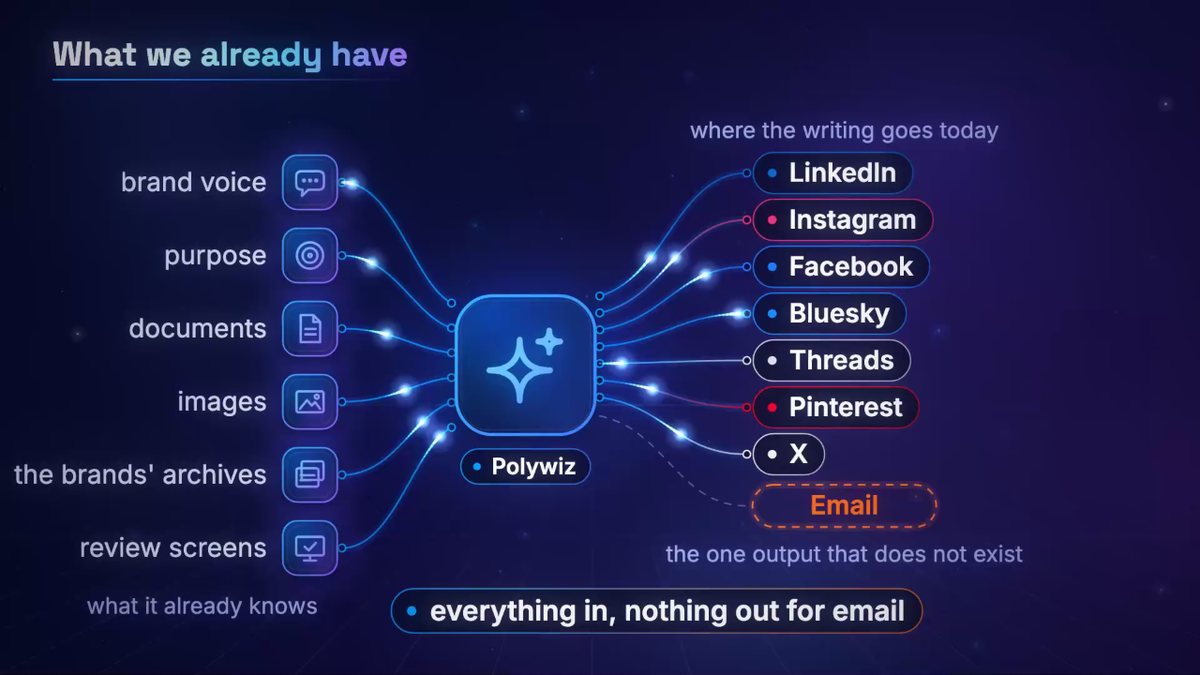
The problem it solves: between the fundraising appeals, an audience should hear a good story twice a week, and nobody has time to write twenty or thirty emails by hand. The engine writes them from what the brand already has, so a campaign keeps its supporters close without adding a writer.
PolyWiz already knows each brand's voice and purpose, has read its documents and archives, and writes for seven social platforms. Email extends the same engine: it takes a campaign that already exists, writes a pool of story emails from it in the brand's voice, each with a subject line, a picture and a plain HTML version, and labels each one for the part of the mailing list it suits. The person who runs the email program picks from the pool and sends through ActiveCampaign, the same way the social posts wait for approval.
Open-call submissions that arrive ready for review
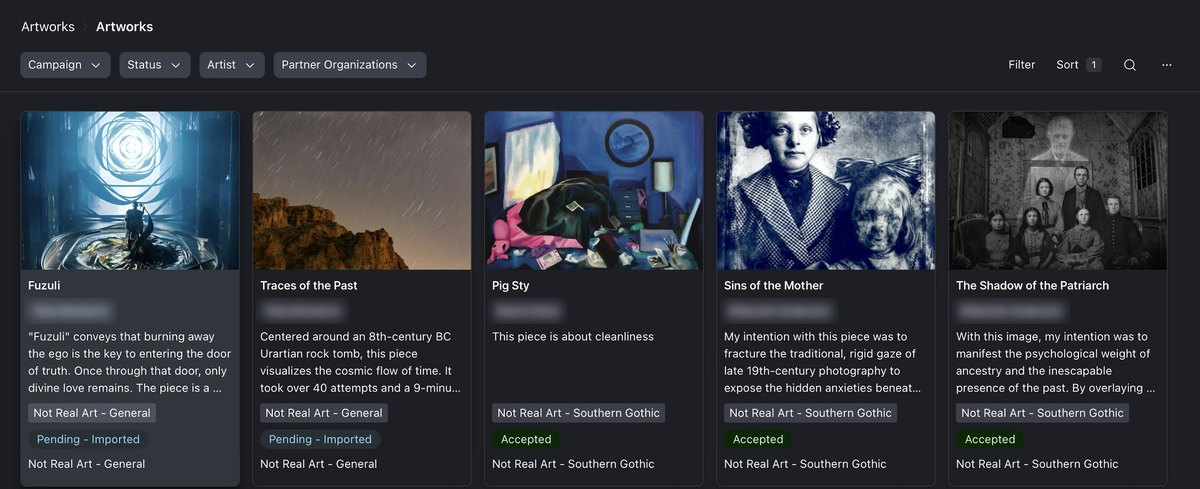
The problem it solves: hundreds of submissions, each needing research, descriptions and data entry before anyone can judge the work. The pipeline does that work as each one arrives, so a small nonprofit team runs open calls at a scale that used to need a full office, and every accepted artwork reaches the archive ready to be found.
For Arterial and Not Real Art, we built a pipeline that takes artist submissions from an online form and turns each one into an archive-ready record. AI researches the artist and checks that what it found is about the right person, describes each artwork from the image itself, connects it to the exhibition theme, and reads the dimensions out of the artist's description. Admins are notified, contacts are synced to the mailing list, and a curator reviews everything in our submissions app before it builds the exact files Artwork Archive imports.
A newsletter and podcast with one editor and a lot of help
The problem it solves: a weekly newsletter with a companion podcast normally takes researchers, writers, voice talent and an audio editor. Here one editor publishes both, because the system does the reading, drafting, voicing and mastering and leaves him the judgment.
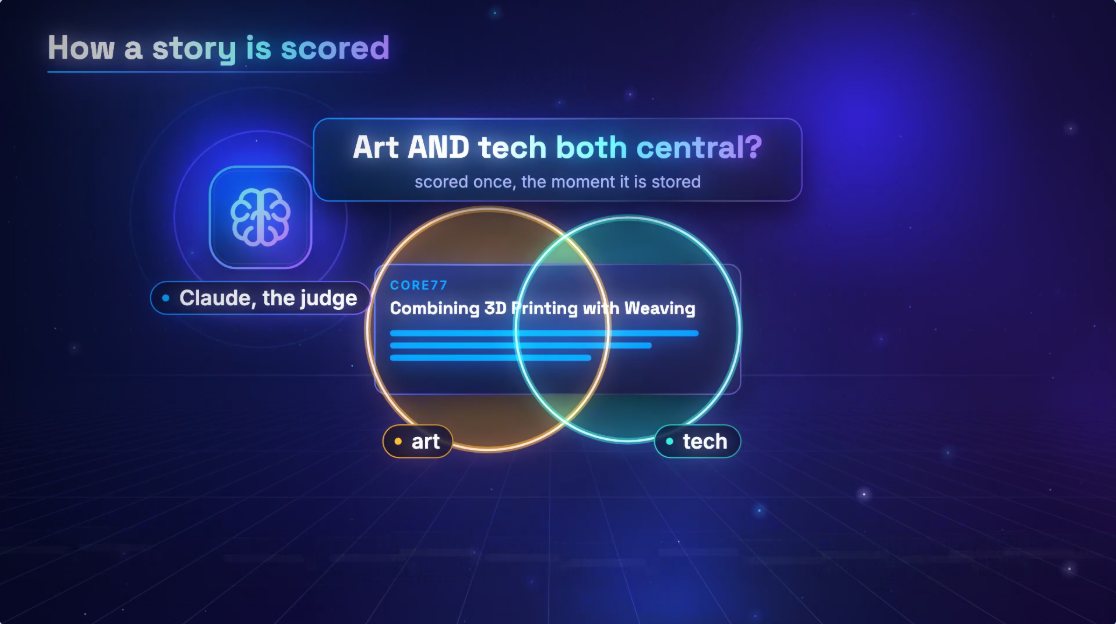
The Intersect, our own weekly newsletter on art and technology, is produced by an app we built. It reads dozens of feeds, scores every article against the beat, learns the editor's taste from his thumbs up and down, and helps him assemble each issue from his phone. For the companion podcast, it gathers the issue's stories, writes the two-host script, and waits for the editor to read, edit and approve it. Only then does it generate the voices, master the audio, write the show notes and publish the episode to the podcast host. An unapproved script is never rendered. The system enforces that, not a reminder.
A video podcast with an AI presenter
The problem it solves: a regular video show usually means an agency, a studio day and an invoice for every episode, so most organizations never start one or stop after a season. The engine makes the episodes from the organization's own material, so a weekly show is affordable and keeps going as long as the audience wants it.
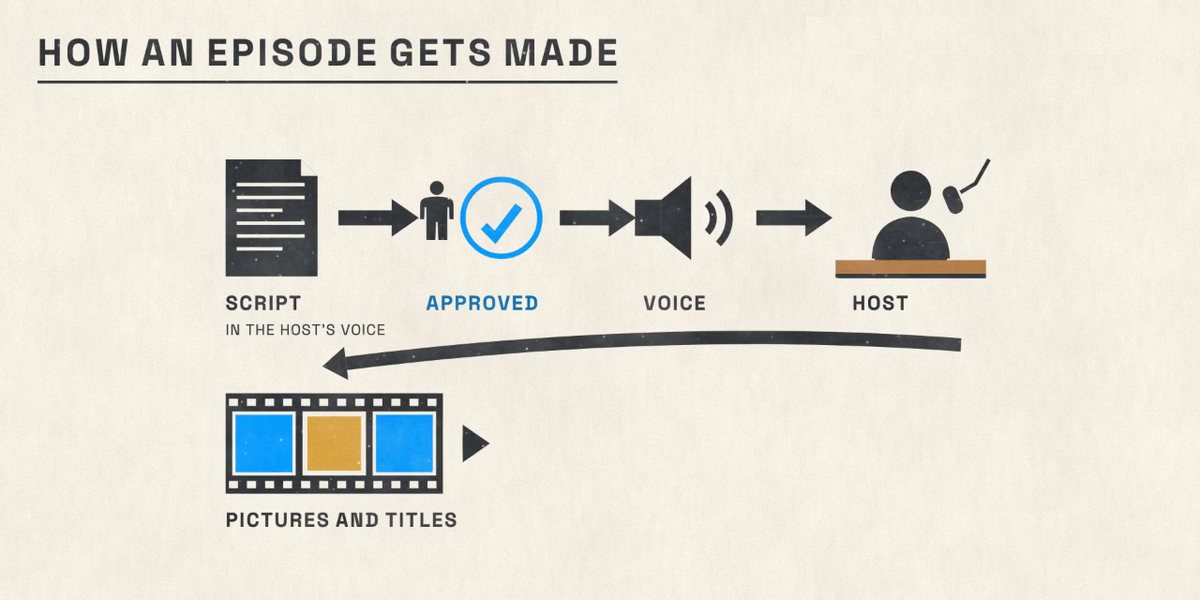
Our engine for a members-only video podcast has a presenter who does not exist: a designed host with a generated face and voice, filmed in one fixed set. Story ideas come in from feeds and suggestions into a backlog the team votes on. The engine writes the script, generates the voice and the presenter's video, cuts in photographs and titles, adds captions and a plain disclosure that the host is AI, and delivers the finished episode. A person approves the script before any audio exists and approves the episode before anyone sees it. It is built on decades of video production: the cuts, the framing and the pacing that keep a viewer watching. More on how we build shows this way: Podcast Production Engines.
Should you own your platform, or keep renting it?
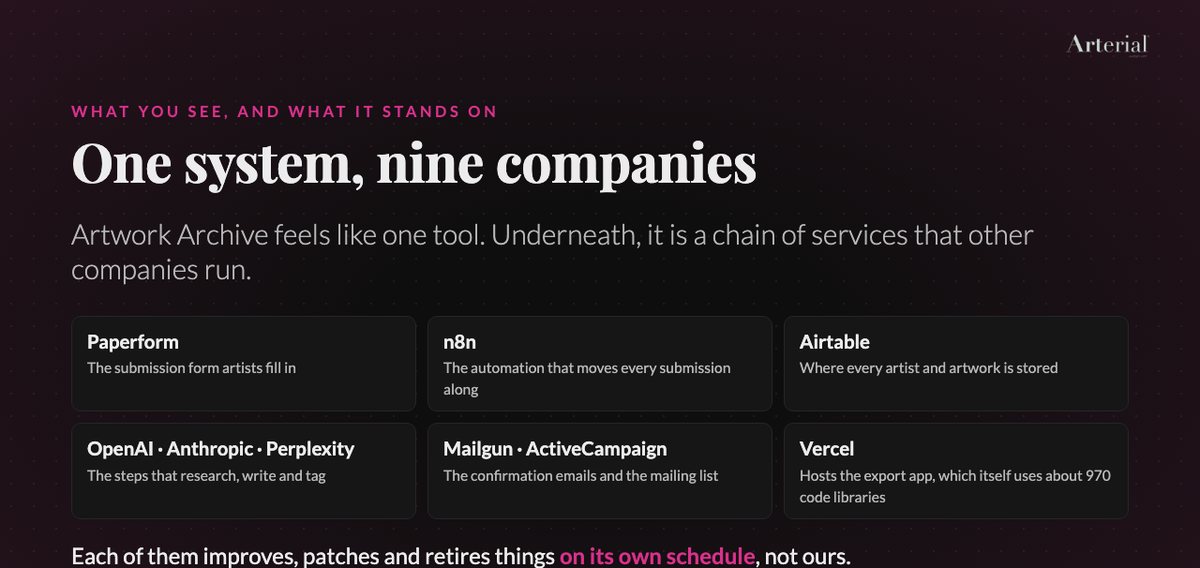
The problem it solves: an organization that runs on a chain of rented tools spends its time patching the joins, and owns none of what it builds. Deciding early what to own and what to rent saves years of rework and turns the system into an asset the organization controls.
Some of our most useful work is the thinking before the project. For one nonprofit we made the case for building its own platform around the collection of artists and artworks it had spent years assembling, instead of displaying it through a stack of rented, disconnected tools. For an email campaign, we argued for a small kit built from tools the organization already owned, used once on a real campaign, before anything larger. Sometimes the answer is to build. Sometimes it is to connect what you have. We will tell you which.
Questions we hear often
Do I need to be technical?
No. You need to know your business and where the work piles up. We ask about how things actually happen in your organization, then we propose the design in plain language. Your team never needs to touch code to review, approve or run what we build.
Is this only for podcasts or the arts?
No. Our examples lean toward publishing and the arts because that is where our own brands live, but the methods are the same for a membership organization, a professional services firm, a local retailer or a manufacturer. Forms, records, research, writing, approvals and publishing look much the same everywhere.
Can you work with the tools we already use?
Yes, and we prefer to. We have built on Airtable, WordPress, Ghost, ActiveCampaign, Paperform, n8n, Vercel and many others. We start by connecting what you have and replace a tool only when it is in the way.
Who owns the system?
That depends on the project, and the proposal says so in writing. One option is a license, where we run and maintain the system for you. Another is full ownership of the system and its intellectual property. Many clients start with the license and keep the option to own everything later.
What happens when an AI model changes or is retired?
Vendors improve, patch and retire the services every modern system is built on, on their own schedule. We watch for those notices across everything we run. When one of our clients' systems depended on models an AI vendor announced it would switch off, we had the migration planned the same month, with side-by-side tests on real data before anything live changes. We build so that a model is a replaceable part, and we plan the upkeep with you rather than leaving it to chance.
How long does a project take?
It depends on the scope, and the proposal says how long each stage takes. A connection between two tools can be a matter of days. A full application with review screens and automation is a project of several stages, each with something working at the end.
What happens after I book the initial conversation?
The initial conversation is a free 30-minute call about your business, the problem, and whether a custom project is the right answer or whether a smaller fix would serve you better. If we go ahead, we write the proposal with the scope, stages and price. Work starts once you have agreed to it.